Claudia Bode and Peter Ewoton
Who we are determines how we see the world, and how we see the world determines what we know about it, and therefore how we act within it. Those actions constitute a power to change. When some ways of seeing (to reference John Berger, 1972) come wrapped in violence and economic or epistemic power, though, they become dominant and are therefore unquestioned; when that way of seeing has achieved dominance, the obvious violence fades away, as it is no longer necessary. It becomes banal. A way of seeing (once one among many) has now achieved the status of having become unremarkable: it takes up all the space, leaving no room for real alternatives. But the violence of that ontological dominance does not really fade away; rather, it plunges underground to be subsumed into the basic set of assumptions we all carry around with us at all times. Violence is transformed into ridicule, aimed at whoever dares to question things that have been made holy. It is channeled into educational curricula, government policy, the set of all things considered unquestionable because “we have agreed to agree”.
As researchers, we cannot separate ourselves from these processes: in myriad ways we have also “agreed to agree”, even if we are unaware of it. So how do we get outside of ourselves to be able to see differently? How do we access a perspective that lets us see the contours of our own world, that enables us to understand how our world is shaped by apparent truths that others may, in fact, contest?
“We” in this case are Claudia Bode, a doctoral researcher and architect based in Oslo, Norway, and Peter Ewoton, a Turkana resident of Lodwar and secondary school teacher. Peter is Turkana-speaking and Claudiais not, producing a linguistic gap that produces a real opportunity to think more deeply about the misalignments between what we know to be true and what we represent to the world, as well as the limits and power of translation.
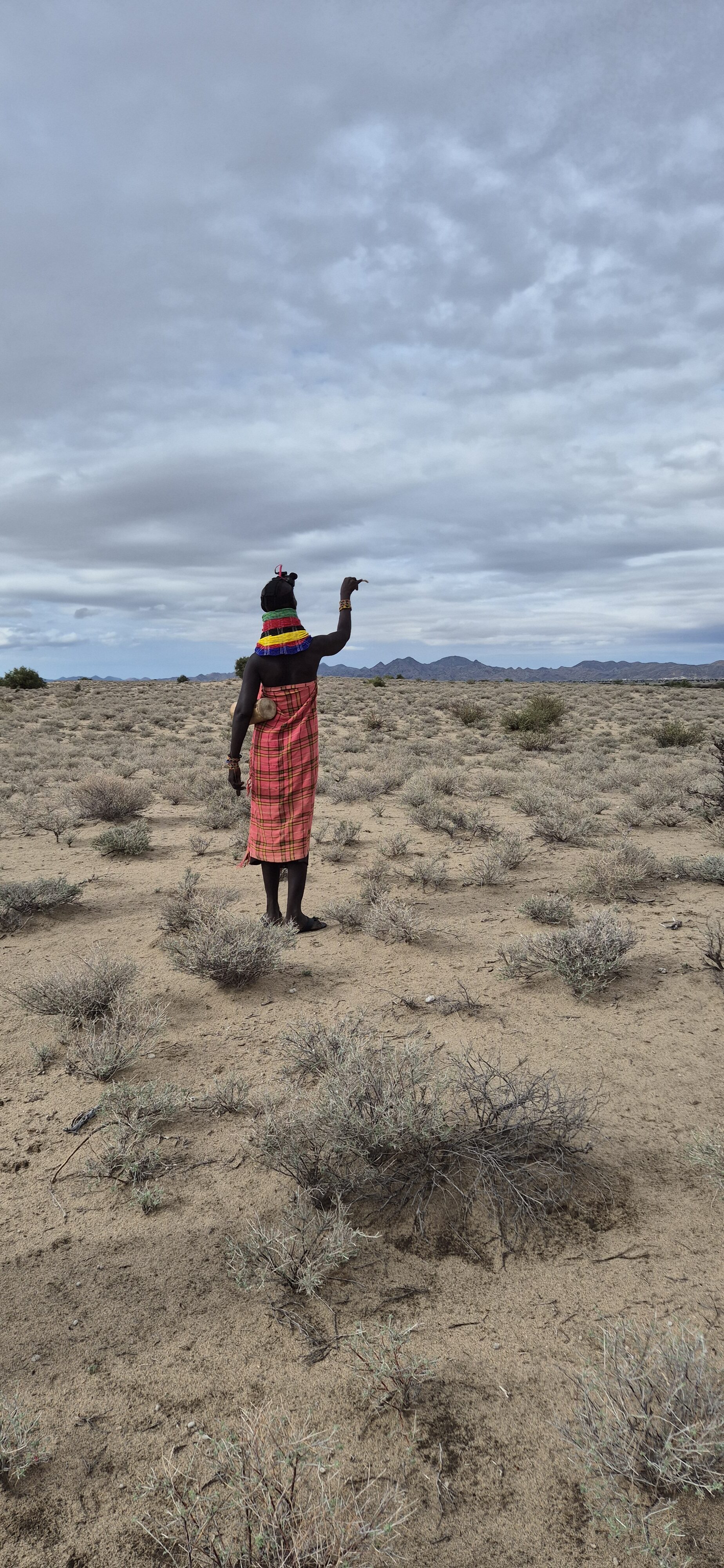
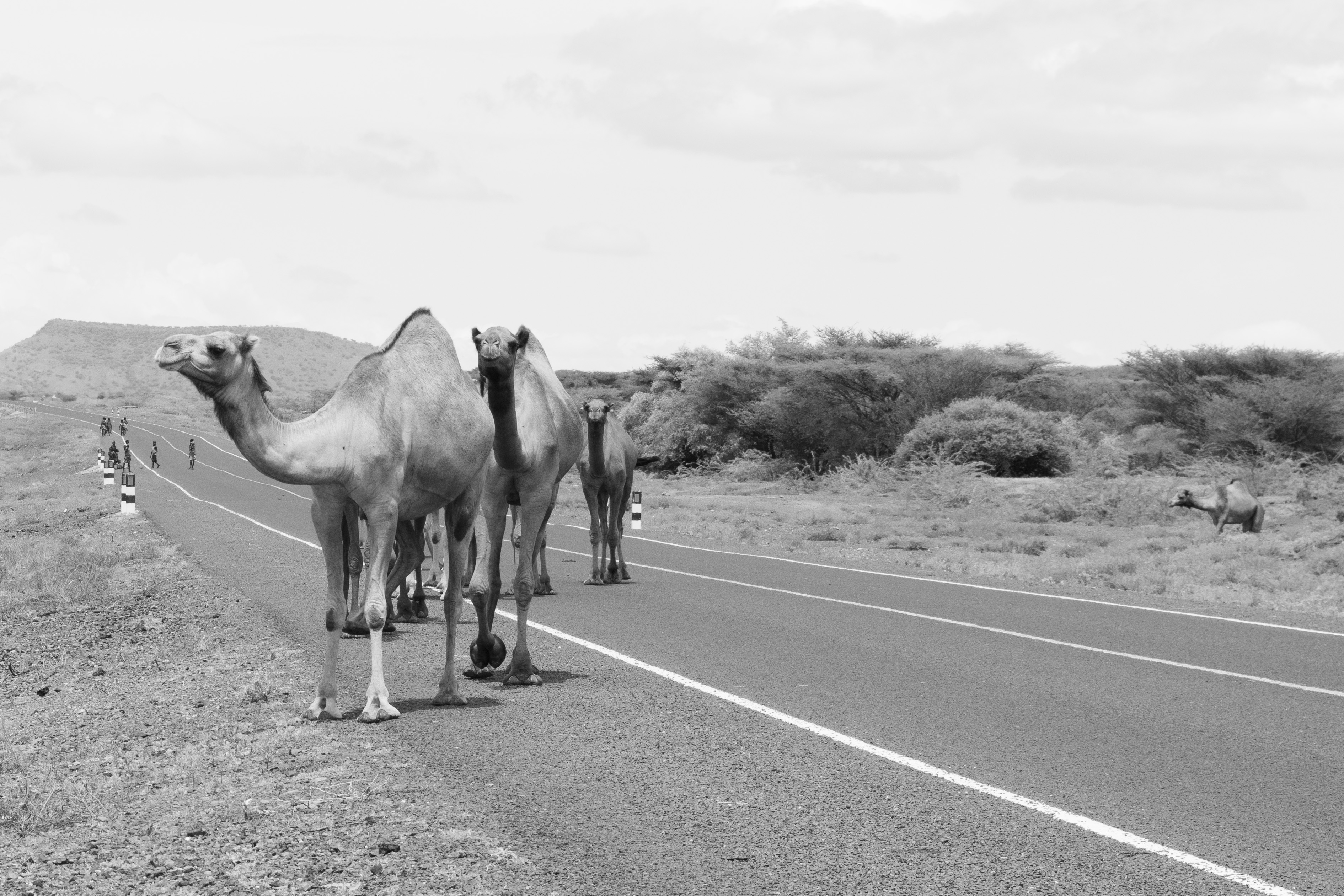
Aligned with Claudia’s doctoral fieldwork carried out in Spring 2026, we used LRG funding to experiment with sensory ethnographic tools in Turkana County, which is part of an extremely arid and historically pastoralist region in northern Kenya. This is a place in which these contestations are at the surface: in which different worlds coexist in the same territory. Most people in Turkana County are Indigenous mobile pastoralists, and they depend on herds of goats, sheep, cows and camels that are constantly in movement. The practice of grazing is the foundation for a kind of territorial circulatory system that spans hundreds of kilometers and regularly crosses international boundaries. This is a world of animals, landscapes, and constant mobility, governed by intricate infrastructures of care and reciprocity that enable equitable access to resources without territorial subdivision and property ownership. But Turkana County is urbanizing quickly, and the roads, fences, water infrastructures and fixed plots that make up towns like Lodwar are quickly expanding into grazing areas. People who live in towns — those who have gone to school and speak Kiswahili and English and have jobs — now live lives which are governed, at least partially, by a different set of assumptions and ways of seeing. This often causes conflict, but it would be simplistic to frame this complex situation in binary or merely oppositional terms.
This research is about the intersections and entanglements between these worlds.
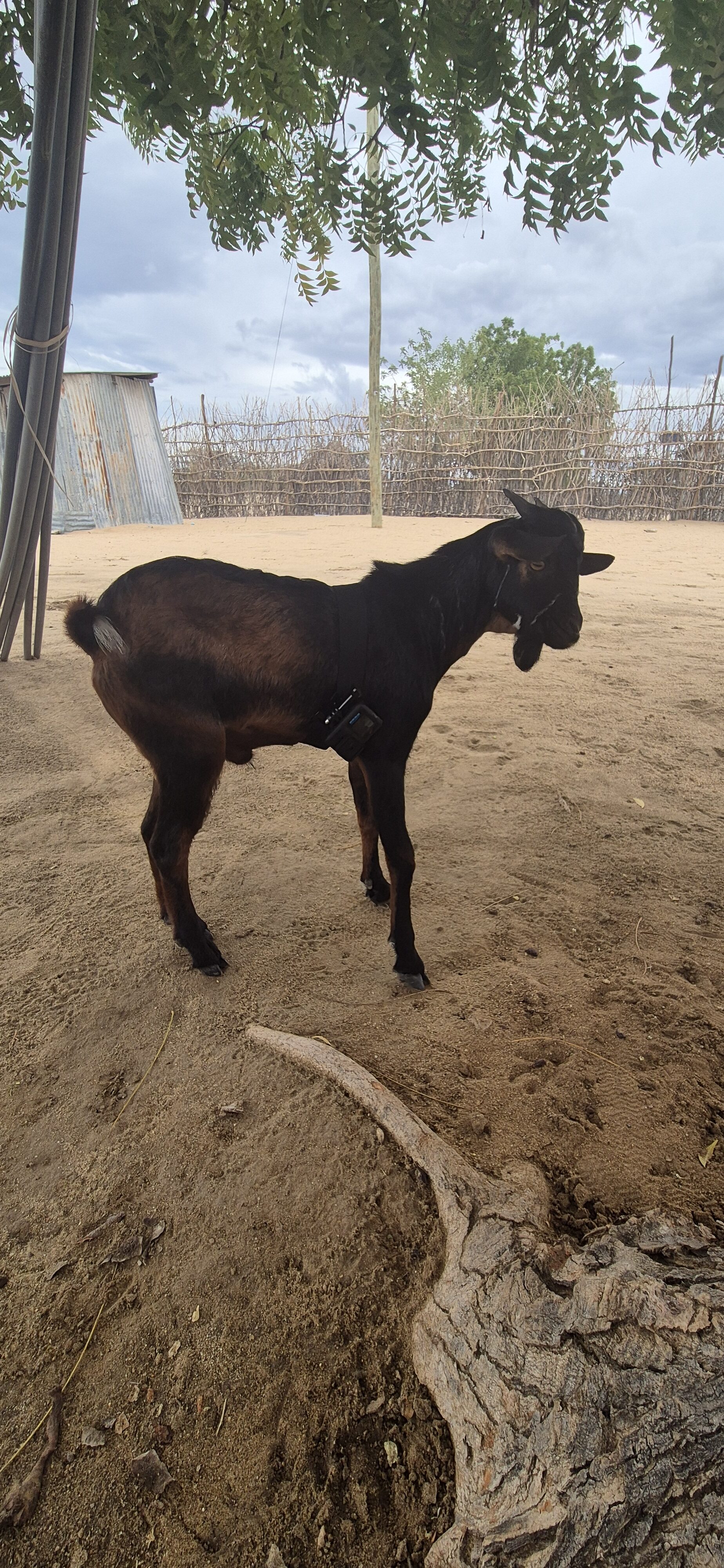
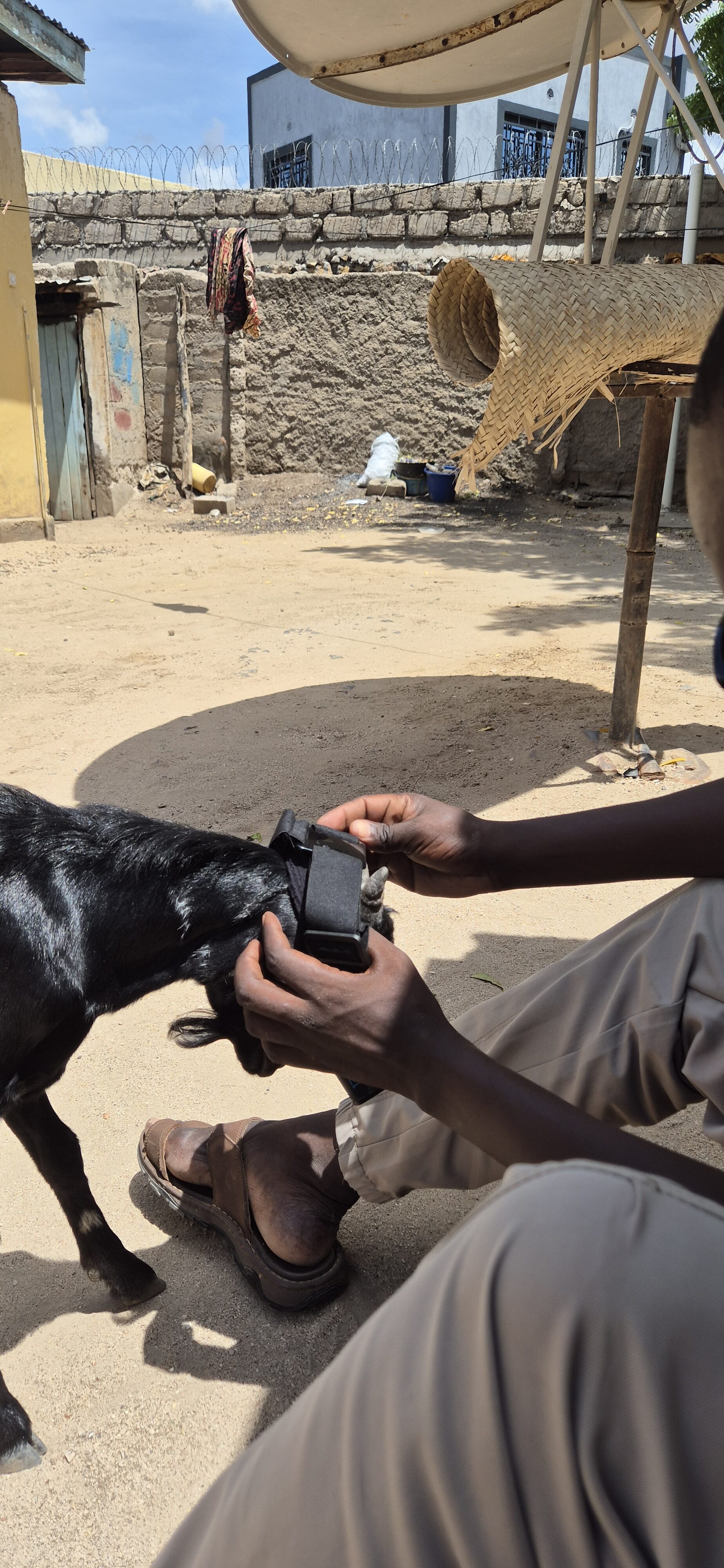
The knowledge of Turkana pastoralists (people who refer to themselves as “raiya“) is created, retained and passed on by walking, talking, telling and retelling, and doing. We collaborated with raiya families to experiment with sensory tools (in particular, a GoPro camera and small wireless microphones), in the hopes of creating playful and exploratory “ontological openings” into their worlds that are more suited to embodied and mobile knowledges. These tools served to assemble a variety of human and nonhuman actors into moments of encounter, and enabled us to collectively access and revisit a wider sensorium both in the moment and afterwards. We collected many hours of footage, a small portion of which has been assembled into the short film below: a film which does not set out to answer any questions, but that strives rather to create the space to ask them. Our own very different positionalities deeply shaped our moments of encounter into mobile choreographies of action that interlaced technologies, landscapes, animals and humans.